




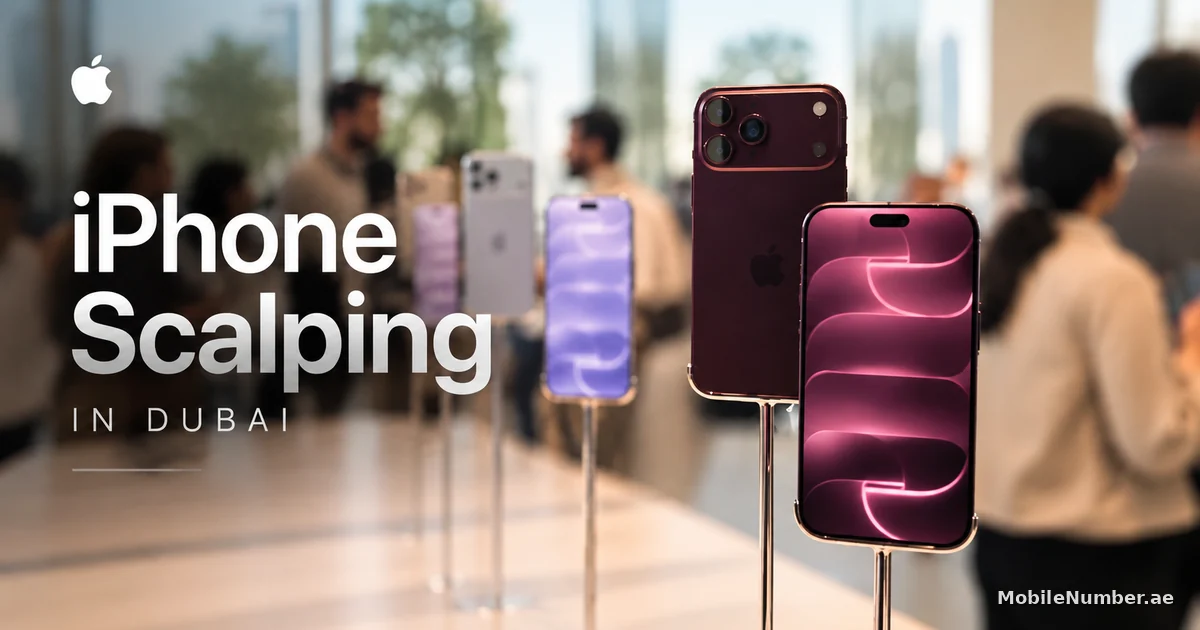
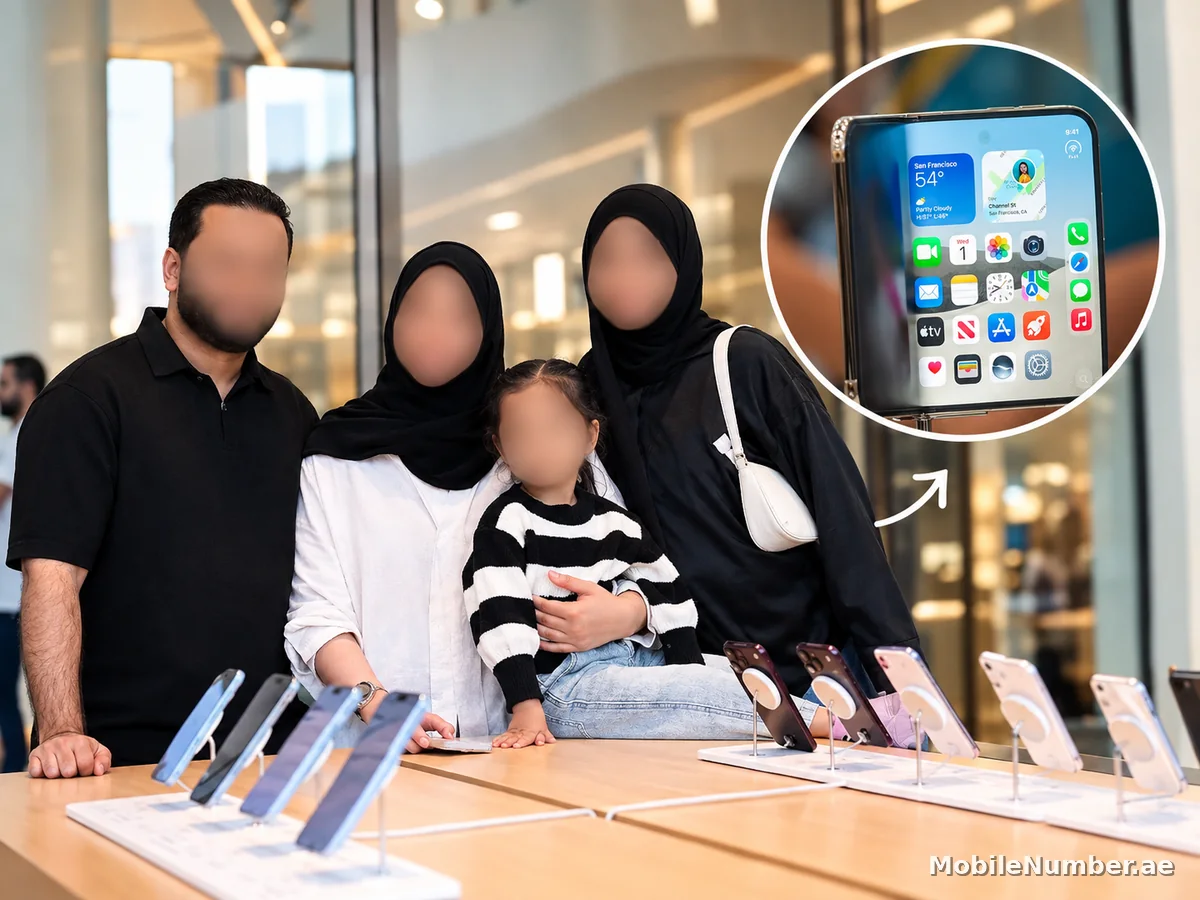
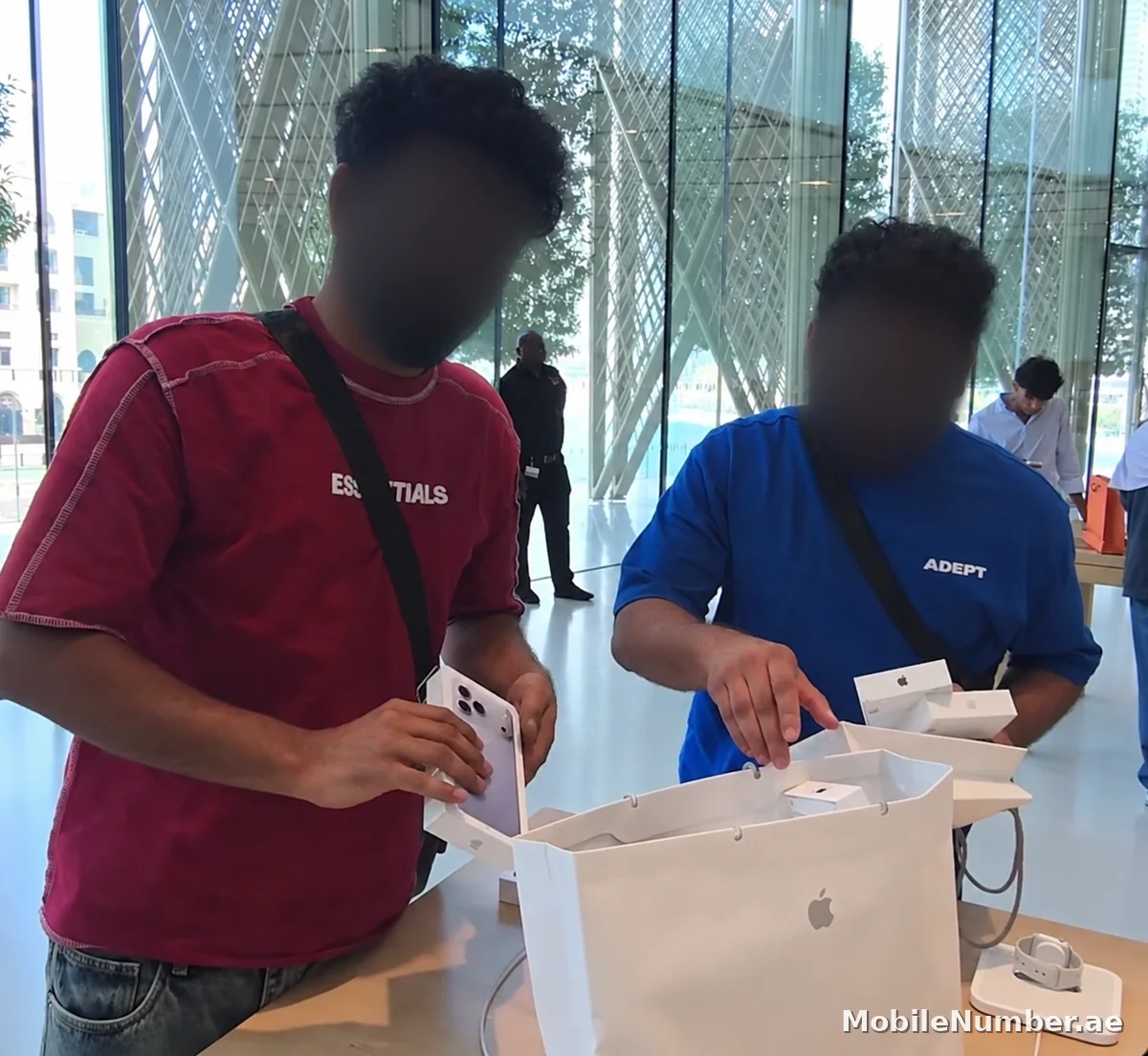
At half past five this morning the queue outside the Apple Store in Dubai Mall was already long enough to bend around the corner. By nine, some of the people in that queue had sold their phones — still sealed, still in the bag — to men standing a few metres from the door.
That is not a rumour. It is the reported scene across the UAE today, the first day the iPhone 18 Pro and iPhone 18 Pro Max are on shelves. Khaleej Times counted two Dubai residents who left with 76 devices between them, for more than Dh 550,000. One expat bought 27. A thirteen-year-old skipped school to collect five. A group of Russian tourists flew in for four.
The internet is doing what the internet does with a scene like that. What almost nobody is posting is the part that decides whether any of it was a good idea: this exact morning already happened, in September 2024, and three days later one of the dealers running the play was down close to Dh 200,000.
This piece lays out both halves. What the premium looks like today, worked out per model. What happened to it in each of the last four launches. And the one structural question that separates a premium that survives from one that evaporates.
What happened outside the Apple Store this morning
Apple introduced the iPhone 18 Pro and iPhone 18 Pro Max on 9 September 2026. Pre-orders opened on 12 September and sold out online in roughly twenty minutes. The phones reached shops today, 18 September.
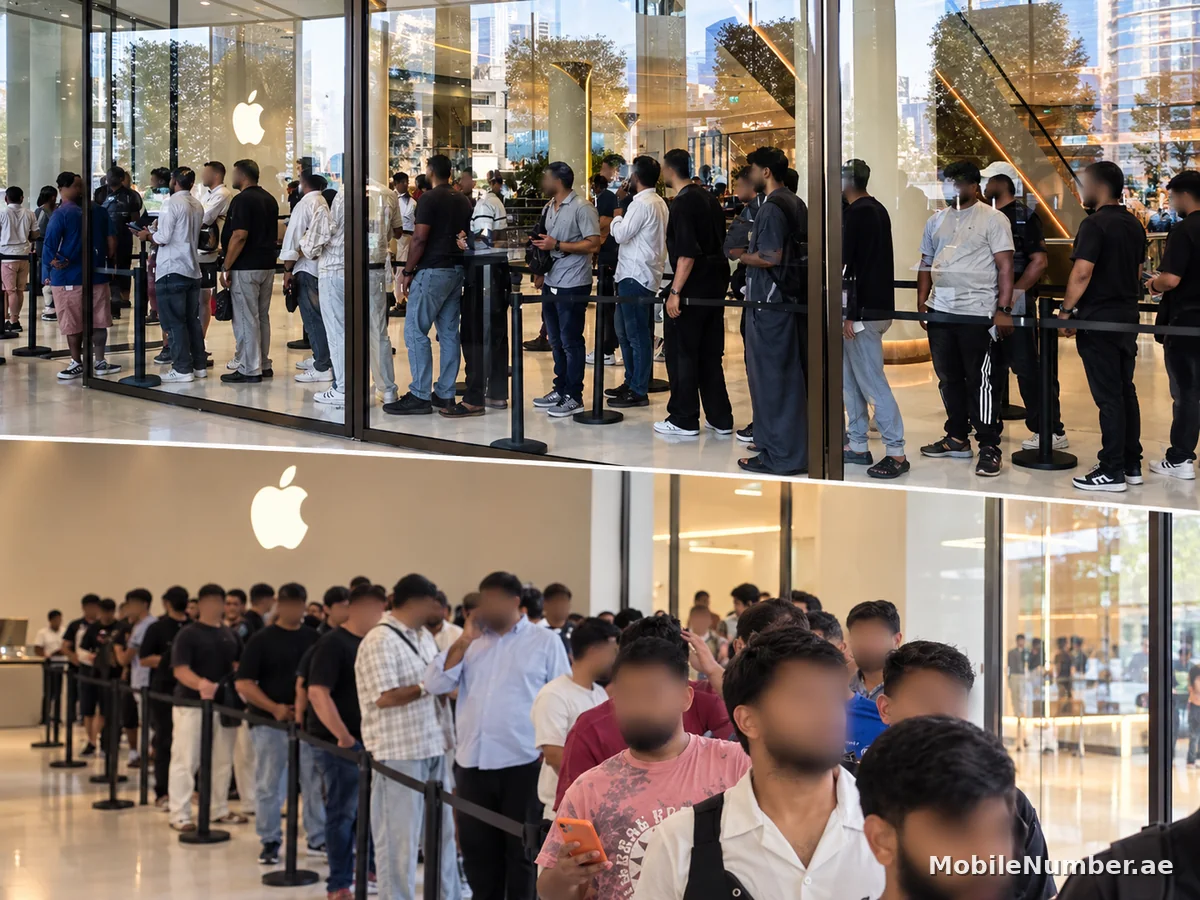
Retail is AED 5,099 for the Pro and AED 5,499 for the Pro Max, both starting at 256 GB and running up to 2 TB. e& and du are both selling them on instalments from about Dh 225 a month.
The street is a different market. According to Khaleej Times, people holding pre-orders walked out of Apple stores and resold on the spot. The asks reported this morning:
| Device | Retail | Asked on the street today | Premium |
|---|---|---|---|
| iPhone 18 Pro 256 GB, burgundy | AED 5,099 | Dh 8,000 | +Dh 2,901 (57%) |
| iPhone 18 Pro 256 GB, other finishes | AED 5,099 | Dh 5,600 | +Dh 501 (10%) |
| iPhone 18 Pro Max 256 GB | AED 5,499 | Dh 6,500 | +Dh 1,001 (18%) |
One reseller outside Mall of the Emirates put it plainly: “I will charge Dh2,000 additional for the iPhone 18 Pro 256GB in burgundy.”
Note how wide that spread is. The same phone, the same morning, the same city — and the ask ranges from ten per cent over retail to fifty-seven. That is not a market with a price. That is a market with a mood.
The margin, worked out
Strip the drama and the trade is simple arithmetic. You buy at retail, you sell at whatever the next person will pay before supply catches up, and the difference is yours minus whatever you could not shift.
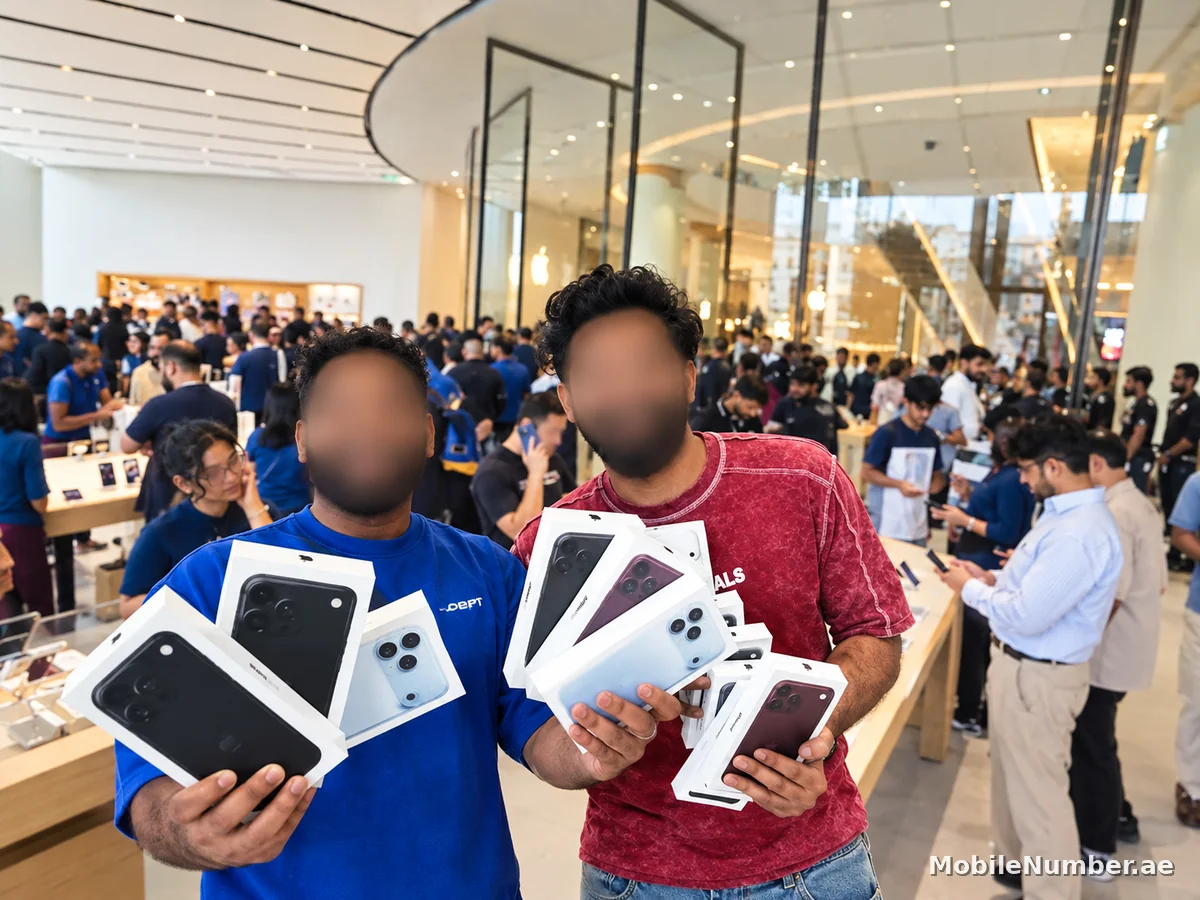
Take the two residents with 76 devices. More than Dh 550,000 across 76 units is an average of over Dh 7,200 a device. Both base models sit well below that, so the mix was weighted towards Pro Max bodies and higher storage tiers — the expensive end, bought at retail.
Now the upside. At today’s reported Pro Max premium of about Dh 1,000 a unit, clearing all 76 would gross roughly Dh 76,000 on Dh 550,000 tied up. Call it fourteen per cent, if every single unit sells at that price, and if it sells quickly.
That “if” is the entire trade, because the shape of the risk is lopsided:
- The upside is capped by what the next buyer will pay, and that number falls every hour as more stock reaches the shelves.
- The downside is not capped at the premium. An unsold unit is not a small loss of margin. It is a device you paid full retail for, now competing with fresh stock and with imported stock, in a category that loses value on a published schedule.
- The capital is committed in one morning and released over days or weeks, if at all.
Fourteen per cent for a week of work sounds excellent. Fourteen per cent that turns into minus thirty because the window shut on day three sounds like something else. Both have happened in this city, two years apart.
Why burgundy, and why 256 GB
The premium is not on “an iPhone 18 Pro”. It is on a specific stock-keeping unit that Apple under-allocated relative to what people wanted.
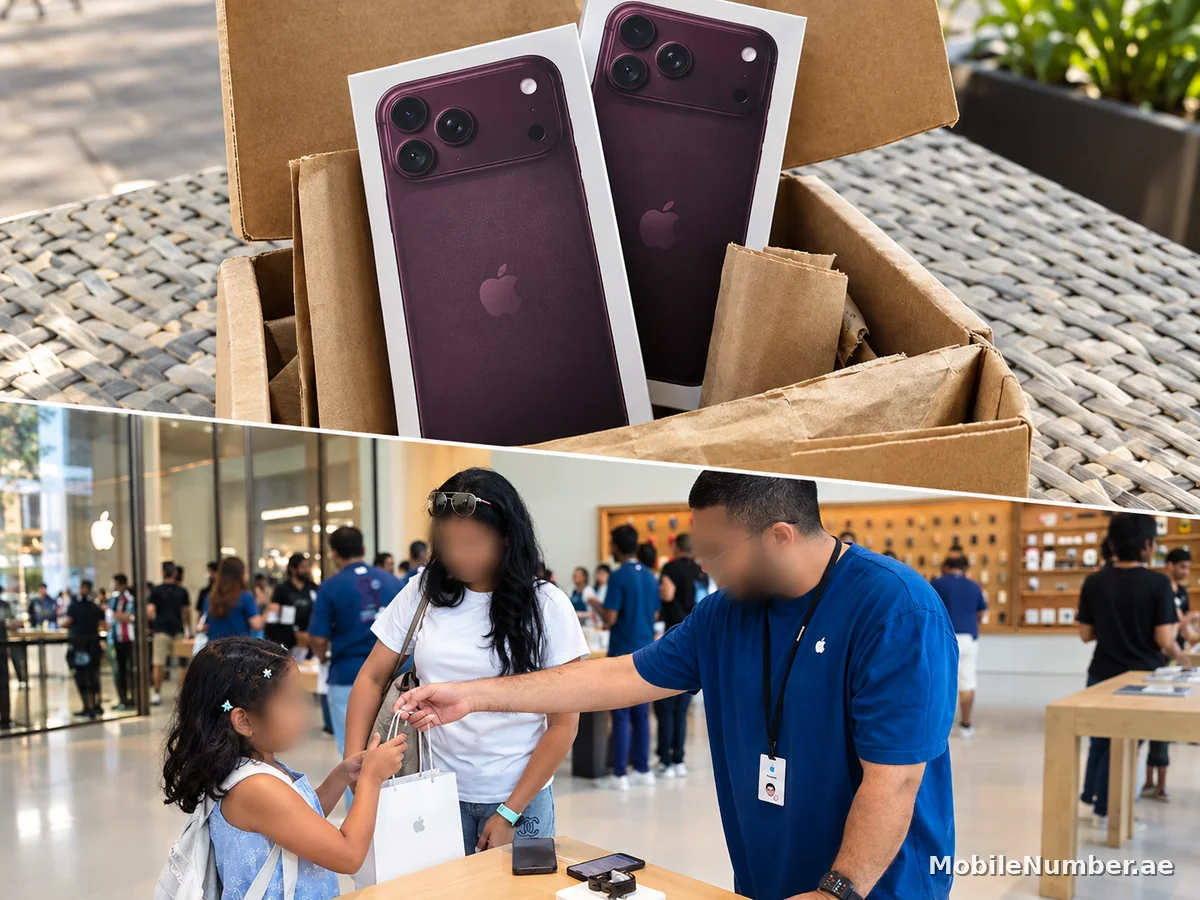
This year that unit is the new burgundy finish, in 256 GB and 512 GB. Those are the variants most of the people flipping had secured, and burgundy is the colour commanding the top of the range. A Pro in a common finish was going for Dh 5,600 this morning. The same phone in burgundy was being asked at Dh 8,000.
That is a Dh 2,400 spread created entirely by a paint choice and an allocation decision made months ago in a supply-chain spreadsheet. It is also the single most fragile part of the trade, because colour scarcity is the first thing a restock fixes. The premium is not on the technology. It is on the queue.
The tell: a retailer says demand is actually down
Here is the detail that should give anyone buying 76 phones a pause.
Mohammed Shareef, who owns Extel Mobiles, told Gulf News that the response to this year’s models has been tepid compared with previous launches. His shop normally takes around 2,000 pre-orders. This year the number came in markedly lower.
Read those two facts together and they do not cancel out — they compound. A frantic resale scene on top of softer underlying demand does not mean the market is hot. It means a thin layer of impatient buyers is being served at a high price while the broad demand that would absorb hundreds of units later is weaker than usual.
That combination is not new. It is precisely what the UAE market looked like in September 2024, three days before the floor fell out.
The three-day clock
September 2024, iPhone 16 launch, same city, same pavements.
On day one, resellers were paying a Dh 2,000 premium per Pro Max to people coming out of the stores. On day two the premium had already fallen to Dh 800–1,000.
On day three it stopped mattering. Khaleej Times reported that thousands of devices from Hong Kong, Singapore, the United States and Japan flooded the UAE market. Imported iPhone 16 Pro Max units were available below local retail, everywhere, with no premium attached at all.
Seventy-two hours. That was the entire window — not because demand collapsed, but because supply arrived on an aircraft. Every dirham of premium that existed on Friday morning was an artefact of stock not having landed yet.
The receipts
The people who found this out did so in public. Khaleej Times spoke to them a week later.
A Dubai electronics dealer identified as JA bought 80 phones on day one, paying more than Dh 160,000 in premiums alone — before the cost of the phones themselves. His team bought 57 more on day two. When the imported stock landed, he was left holding 137 devices bought above retail in a market selling below it. His reported loss: close to Dh 200,000.
A second reseller, MP, lost around Dh 100,000 the same week. His quote is the one worth pinning to the wall, because it explains exactly why he was there:
“Last year, I made a profit of Dh70,000 on the iPhone 15 models in just 10 days.”
He was not reckless. He was running last year’s playbook. That is the trap: the strategy that paid in 2023 is the strategy that cost him Dh 100,000 in 2024, and nothing about the morning of the launch told him which year he was in.
Four launches, four different answers
Put the four most recent UAE launches side by side and the pattern that emerges is not a trend. It is a coin toss with real money on it.
| Launch | What the flip paid | What ended it |
|---|---|---|
| iPhone 15 — 2023 | One reseller: +Dh 70,000 in 10 days | Window stayed open long enough |
| iPhone 16 — 2024 | Two dealers: −Dh 200,000 and −Dh 100,000 | Parallel imports landed on day three |
| iPhone 17 — 2025 | Premium peaked around Dh 500 on the Pro Max | Barely a trade to begin with |
| iPhone 18 — 2026 | Asks up to Dh 3,000 over retail today | Unwritten |
Today’s premium is the largest in three years. That is the bullish reading. The bearish reading is that the last time the premium looked like this, it was 2024 — and 2024 is the year that ended in six-figure losses.
The signal from China
If you want to know when the containers are coming, do not watch Dubai. Watch the market that supplies the parallel trade.
In China, the iPhone 18 Pro sold out with reports of seven million pre-orders in five minutes and transaction premiums of around 27 per cent over retail, with local coverage openly describing a staged shortage.
That sounds like confirmation that the phone is hot everywhere. Read it as a supply signal instead. Enormous allocation plus an aggressive resale culture is precisely the machine that produced the units which crossed into the UAE in 2024 and ended the premium in seventy-two hours. The frenzy that makes headlines in one market this week is the surplus that lands in another market next week.
Nothing about that is illegal or even unusual. It is simply how a globally distributed product with a fixed retail price behaves when one region is short and another is long.
When a flip becomes a business
Selling a phone you bought and decided not to keep is a private sale. Doing it seventy-six times before lunch is something else, and the distinction matters in the UAE.
Three things worth knowing before the second device:
- Commercial activity requires a licence. In the UAE, trading is licensed activity — mobile phone and accessories trading sits under a commercial trade licence issued by Dubai’s Department of Economy and Tourism for mainland businesses, or by the relevant free zone authority. The test is not a magic number of units; it is whether the activity is commercial in character. You can check licences on the official UAE government platform.
- Warranty follows the region, not the buyer. A device bought in the UAE and carried abroad may not receive local service in its destination market, and the same is true in reverse for imported stock. That is part of why parallel-import units sell below local retail — the discount is partly a warranty discount.
- Quantity attracts attention at the border. Moving devices out of the country in volume is not the same as travelling with your own phone, and customs declaration rules apply to goods carried for trade.
None of this makes flipping a phone wrong. It makes running it as an unlicensed business a separate decision from whether the margin is attractive — and one that the margin arithmetic above does not price in.
The import test
Here is the question that separates a premium which survives from one which evaporates, and it takes one sentence:
Can more of it be flown in?
For the iPhone 18 Pro the answer is yes. Apple can allocate more. Hong Kong can ship more. That is not a criticism of the phone — it is an excellent phone. It is a statement about the asset. Any premium sitting on a device whose supply can arrive by air freight is a premium with an expiry date, and the 2024 receipts are what that expiry date looks like when it arrives early.
Now apply the same test to a UAE mobile number.
There is no container. The supply of UAE numbers is set by the national numbering plan and by six prefixes in circulation, and the supply of interesting numbers inside that plan is set by arithmetic that nobody can restock. No shipment from Singapore adds a single quad. Measured across our own catalogue this morning, deduplicated:
| Pattern | Live listings on MobileNumber.ae |
|---|---|
| Four identical digits in a row (XXXX) | 1,280 |
| Five in a row | 196 |
| Six in a row | 23 |
| True palindromes | 625 |
Twenty-three six-in-a-row numbers are twenty-three six-in-a-row numbers, whether or not a freighter lands at Jebel Ali tomorrow morning. That is the entire structural difference, and it is worth being precise about what it does and does not mean.
It does not mean numbers go up. It does not mean a number is an investment, and this is not advice to treat it as one. Plenty of numbers sit unsold for months; we have written about exactly that. What fixed supply means is narrower and more useful: the specific failure mode that wiped out the 2024 flippers — a premium destroyed overnight by imported stock — cannot happen to a number. Numbers can disappoint for many reasons. That is not one of them.
What that actually looks like in our own catalogue
Fixed supply is not the same as guaranteed value, and we would rather show you the unglamorous version than let the last section stand on its own.
As of this morning MobileNumber.ae carries 47,077 active listings, of which 37,617 show a public price. Those listings come from two very different kinds of seller, and blending them would produce a meaningless number, so here they are apart:
| Seller | Priced listings | Median asking price |
|---|---|---|
| Our own house account | 21,354 | AED 4,250 |
| Private sellers | 16,263 | AED 325 |
Read the second row again. The median private listing on this marketplace asks AED 325. The overwhelming majority of UAE numbers are ordinary, and ordinary numbers are cheap — we published a whole piece on what a number with no pattern at all is actually worth, and another on why most private listings never sell.
The scarce end is genuinely scarce — those 23 six-in-a-row numbers are real — and the common end is genuinely common. Anyone who tells you otherwise is selling you something. What we are saying is narrower than a pitch: a fixed-supply asset can disappoint you slowly. It cannot be wiped out in seventy-two hours by an aircraft.
One footnote that connects the two markets, and it is a practical one. The phone somebody flipped this morning has no SIM tray at all — the UAE is an eSIM-only market for these models. So the line moves as an eSIM profile, and moving an eSIM is not the same as transferring ownership of the number. We covered that distinction in detail when the phones were announced: iPhone 18 Pro UAE: no SIM tray, eSIM only. If a number is part of the deal, ownership has to be transferred properly at the carrier.
If you are going to do it anyway
Plenty of people will, and some of them will do well. If that is you, the four questions below are the ones the 2024 cohort wishes they had answered on the morning rather than on day three.
- What is your exit window, in hours? Not “this week”. In 2024 the premium halved between day one and day two and was gone on day three. Decide in advance what you will accept on Saturday, and take it.
- What proportion of your capital is in one SKU? The burgundy premium is the biggest today and the most fragile, because a colour shortage is the easiest thing in the world to restock.
- What is your price if the premium goes to zero? That is not a pessimistic question. It is the actual 2024 outcome, and it means selling at or below retail into a market full of imported stock.
- Is this a sale or a business? If it is the second one, the licence question above is not optional, and it is cheaper to answer before than after.
And one thing worth doing regardless: if you already own a good number, you do not need a launch queue to find out what it is worth. Our free valuation calculator takes the prefix, the pattern and the carrier and gives you an estimate in a few seconds — and if you are buying rather than selling, the pre-purchase checklist is the piece to read first.
Frequently asked questions
How much is an iPhone 18 Pro selling for in Dubai today?
Retail is AED 5,099 for the iPhone 18 Pro and AED 5,499 for the Pro Max, both from 256 GB. On the street this morning, asks reported by Khaleej Times ran from Dh 5,600 for a Pro in a common finish to Dh 8,000 for a burgundy Pro 256 GB, with the Pro Max 256 GB at around Dh 6,500.
Why is the burgundy iPhone 18 Pro more expensive than the other colours?
Because it is the finish most people want and the one in shortest supply on launch day. The premium sits on a specific colour and storage combination, not on the model — which is also why it is the part of the trade most likely to disappear first, as soon as stock is replenished.
Is reselling iPhones profitable in Dubai?
It has been both. One reseller told Khaleej Times he made Dh 70,000 in ten days on the iPhone 15 in 2023. The following year, running the same play on the iPhone 16, one dealer lost close to Dh 200,000 and another about Dh 100,000 when imported stock arrived on day three. The launch morning looks identical in both years.
How long does the launch premium last in the UAE?
In 2024 it lasted about seventy-two hours: Dh 2,000 per Pro Max on day one, Dh 800–1,000 on day two, and effectively nothing on day three once parallel stock from Hong Kong, Singapore, the US and Japan reached the market. There is no guarantee this year behaves the same way, in either direction.
Why did resellers lose money on the iPhone 16 in 2024?
They paid premiums to buy at above retail, then the market was flooded with imported units selling below local retail. The phones were fine; the premium they had paid for simply stopped existing. One dealer had paid more than Dh 160,000 in premiums alone across 80 devices on day one.
Do I need a trade licence to resell phones in the UAE?
Selling a device you own is a private sale. Trading is a licensed activity in the UAE: mobile phone and accessories trading falls under a commercial trade licence from Dubai’s Department of Economy and Tourism for mainland businesses, or from the relevant free zone authority. The test is the commercial character of the activity, not a particular number of devices.
How many iPhones did people buy at the Dubai launch?
Two Dubai residents bought 76 devices between them for more than Dh 550,000. One expat bought 27, a thirteen-year-old collected five, and a group of Russian tourists flew in for four, according to Khaleej Times.
Were iPhone 18 pre-orders really sold out in the UAE?
Online pre-orders sold out in roughly twenty minutes, and some retailers still had walk-in stock on launch day. At the same time, one retailer told Gulf News that pre-order volumes at his shop were well below the usual figure of about 2,000 — so a sell-out and soft demand are not mutually exclusive.
What is a UAE VIP or golden mobile number?
A UAE mobile number whose digits form a memorable pattern — repeated runs such as 7777, mirrored sequences, round endings or culturally significant strings. Supply is fixed by the national numbering plan, which is the structural difference from a device.
Does a mobile number hold its value better than a phone?
A number is not subject to the failure that destroyed the 2024 flip, because supply cannot be imported. That is a statement about one specific risk, not a promise of appreciation. Most numbers are ordinary: the median private listing on our marketplace asks AED 325.
Can I move my number to a new iPhone 18 Pro?
Yes. The UAE models have no SIM tray, so the line is provisioned as an eSIM. Moving an eSIM between your own devices is not a change of ownership — transferring a number to a different owner is a separate process at the carrier.
Where can I see what UAE numbers actually sell for?
Every live listing on MobileNumber.ae shows its asking price, and our valuation calculator gives an estimate for a number you already own. We publish the seller split rather than a blended average, because the house account and private sellers price very differently.
Method, and what these figures do not show
Launch-day prices, premiums, purchase volumes and the 2024 reseller losses are as reported by Khaleej Times and Gulf News; retail pricing and the launch timeline follow Apple’s own announcement. We have not independently verified individual purchases or the amounts any reseller made or lost, and the resellers in the 2024 reporting were identified only by initials.
Marketplace figures were measured on our own live catalogue on 18 September 2026 and are deduplicated by prefix and number, so a listing that appears more than once is counted once. Price figures are split between our house account and private sellers and are never blended, because the two behave very differently.
Three limits worth stating plainly. These are asking prices, not sale prices — for phones on the street and for numbers on our marketplace alike. A single launch morning is not a market; the four-year table above is four data points, not a trend line. And nothing here is investment advice: the argument is about one specific mechanism, that supply which can be air-freighted cannot sustain a premium, and it says nothing about whether any particular number or phone will be worth more tomorrow.