




پری پیڈ VIP نمبر کیا ہوتا ہے؟
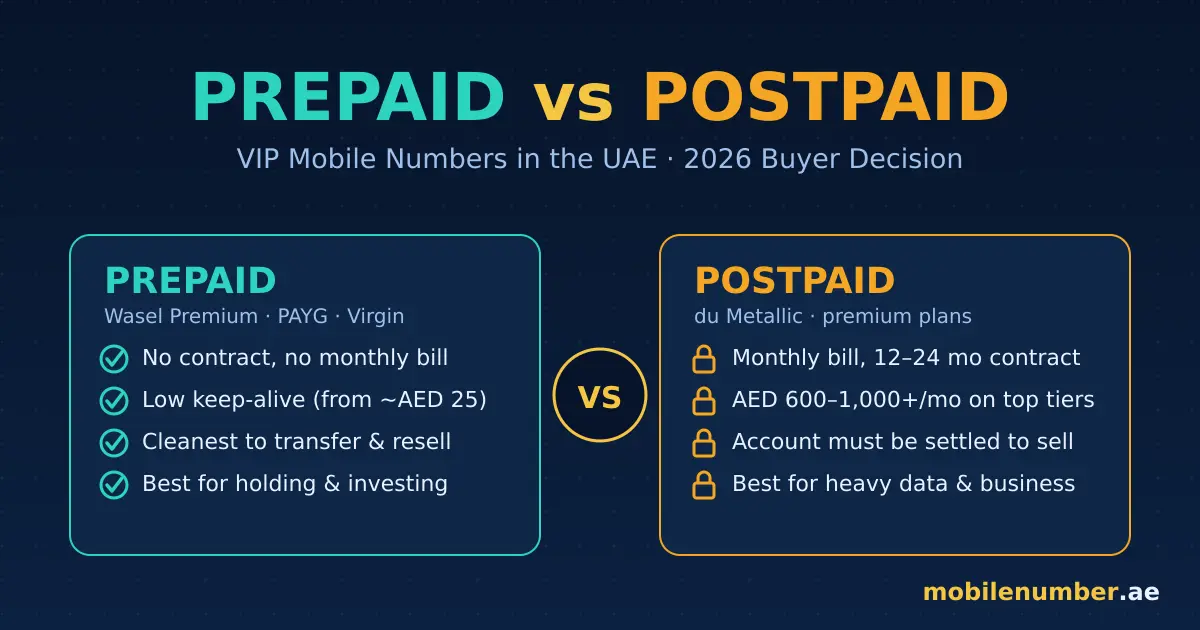
پری پیڈ VIP نمبر ایک پریمیم موبائل نمبر ہوتا ہے جو پے-ایز-یو-گو پلان پر ہوتا ہے، جس میں آپ پہلے سے کریڈٹ لوڈ کرتے ہیں اور کوئی ماہانہ بل ادا نہیں کرتے۔ UAE میں سب سے اہم پری پیڈ پروڈکٹ Etisalat کی Wasel لائن ہے — جب نمبر کا پیٹرن مضبوط ہو تو اسے Wasel Premium کہتے ہیں — اس کے علاوہ du Pay As You Go اور Virgin Mobile کے لچکدار پری پیڈ پلانز بھی شامل ہیں۔
اس کی سب سے بڑی خصوصیت یہ ہے کہ ملکیت بغیر کسی پابندی کے ملتی ہے۔ آپ نمبر رکھتے ہیں، آپ اسے کنٹرول کرتے ہیں، اور آپ کی واحد ذمہ داری ایک چھوٹی ری چارج ہے تاکہ نمبر فعال رہے۔ نہ کوئی معاہدہ، نہ تنخواہ کا سرٹیفکیٹ، اور نہ ماہانہ انوائس۔ یہی وجہ ہے کہ ثانوی مارکیٹ کی زیادہ تر فہرستیں پری پیڈ ہوتی ہیں: یہ خریدنے، رکھنے اور فروخت کرنے کے لیے سب سے صاف اثاثہ ہیں۔
پری پیڈ نمبرز انہی پیٹرنز پر غالب ہیں جن کی خریدار تلاش کرتے ہیں — دہرائے جانے والے ہندسے، آئینہ ترتیب، اور 050، 054، 056، 055 اور 058 پر خوش قسمت امتزاج۔ اگر آپ ابھی فیصلہ نہیں کر سکے کہ کون سا نمبر لینا ہے، تو ہمری UAE میں VIP موبائل نمبر خریدنے کی مکمل گائیڈ پیٹرن، پریفکس اور قیمت کی وضاحت کرتی ہے۔
پوسٹ پیڈ VIP نمبر کیا ہوتا ہے؟
پوسٹ پیڈ VIP نمبر ایک پریمیم نمبر ہوتا ہے جو ماہانہ بلنگ کنٹریکٹ سے منسلک ہوتا ہے، جس میں آپ پہلے سروس استعمال کرتے ہیں اور ہر سائیکل کے آخر میں ادائیگی کرتے ہیں۔ پوسٹ پیڈ پلانز میں وافر ڈیٹا، مقامی اور بین الاقوامی منٹس، اور رومنگ شامل ہوتی ہے — اور UAE میں یہ ایسے مخصوص پریمیم نمبروں تک رسائی کا واحد ذریعہ ہیں جنہیں کیریئرز پری پیڈ پر فروخت نہیں کرتے۔
پوسٹ پیڈ کے لیے اہلیت لازمی ہے۔ آپ کو ایک درست Emirates ID چاہیے، اور پلان کے درجے کے مطابق کیریئر تنخواہ کا سرٹیفکیٹ یا UAE بینک اکاؤنٹ بھی مانگ سکتا ہے۔ نئے آنے والے جن کے رہائشی کاغذات ابھی زیر کارروائی ہیں، وہ عموماً ابھی پوسٹ پیڈ لائن نہیں کھول سکتے — یہی عملی وجہ ہے کہ بہت سے تارکین وطن پری پیڈ سے شروع کرتے ہیں۔
پلان کی قسم محض ظاہری تفصیل نہیں ہے۔ یہ طے کرتی ہے کہ نمبر رکھنے کی لاگت کتنی ہے، آپ اسے کتنی آسانی سے فروخت کر سکتے ہیں، اور بعض صورتوں میں آیا آپ اسے رکھ بھی سکتے ہیں یا نہیں۔
پری پیڈ بمقابلہ پوسٹ پیڈ VIP نمبرز: آمنے سامنے موازنہ
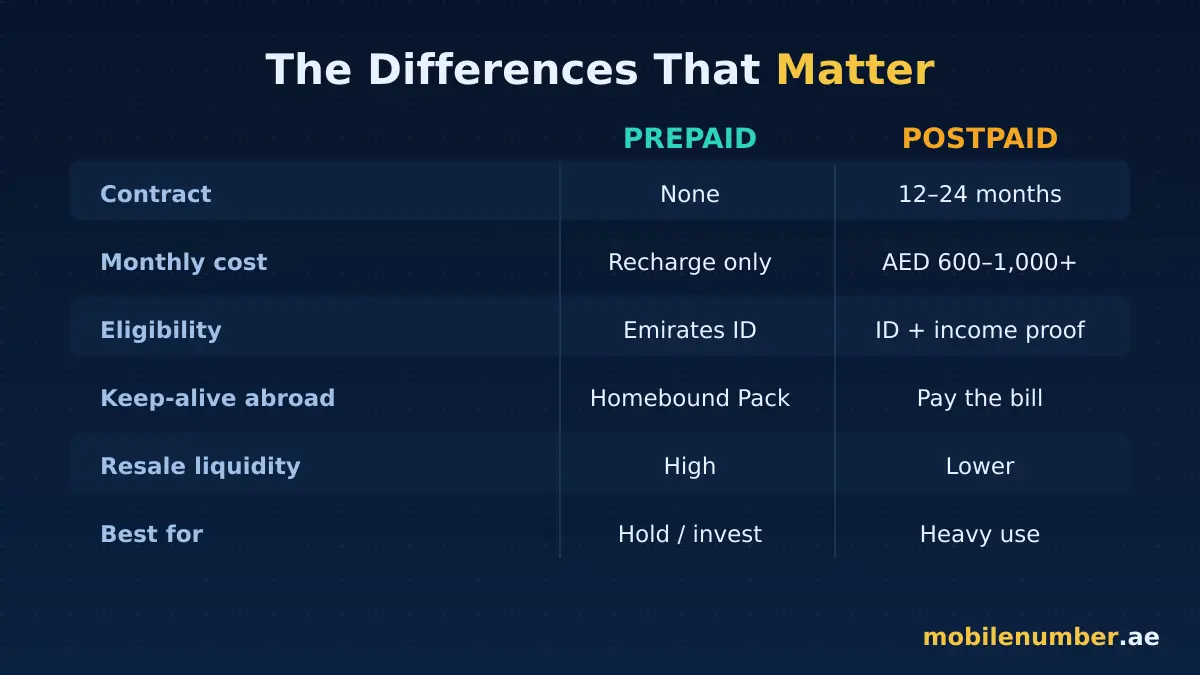
نیچے دی گئی جدول میں دونوں پلان کی اقسام کا موازنہ اس شخص کے نقطۂ نظر سے کیا گیا ہے جو پریمیم نمبر کو محض فون لائن کے طور پر نہیں بلکہ ایک اثاثے کے طور پر خرید رہا ہو۔
| عنصر | پری پیڈ VIP نمبر | پوسٹ پیڈ VIP نمبر |
|---|---|---|
| رکھنے کی ماہانہ لاگت | کم — صرف ری چارج (~AED 25–55 سے) | مقررہ بل (پریمیم درجوں پر اکثر AED 600–1,000+) |
| معاہدہ | کوئی نہیں | عام طور پر 12–24 ماہ |
| اہلیت | صرف Emirates ID | Emirates ID + بعض اوقات تنخواہ سرٹیفکیٹ / بینک اکاؤنٹ |
| بہترین استعمال | رکھنا، سرمایہ کاری، ہلکا/درمیانہ استعمال | زیادہ ڈیٹا + کالز، بزنس لائنز |
| دوبارہ فروخت کی آسانی | زیادہ — صاف، کوئی اکاؤنٹ نمٹانے کی ضرورت نہیں | کم — پہلے بلنگ اکاؤنٹ بند کرنا ہوگا |
| بیرون ملک فعال رکھنا | Homebound Pack (30/60 دن) | بل ادا رہے تو فعال رہتا ہے |
| موزوں کیریئر | Etisalat Wasel Premium، Virgin، du PAYG | du "میٹالک" پریمیم درجے، Etisalat پریمیم پلانز |
ملکیت کی لاگت: آپ اصل میں کتنا ادا کرتے ہیں
VIP نمبر کی سرخی والی قیمت وہ ہے جو آپ بیچنے والے کو دیتے ہیں۔ پوشیدہ لاگت وہ ہے جو آپ ہر ماہ نمبر فعال رکھنے کے لیے ادا کرتے ہیں — اور یہیں پری پیڈ اور پوسٹ پیڈ کا فرق واضح ہو جاتا ہے۔
پری پیڈ پر، رکھنے کی لاگت ایک چھوٹی وقفے وقفے سے ری چارج ہے۔ Etisalat Wasel کو تقریباً ہر 90 دن میں سرگرمی چاہیے؛ du پری پیڈ کی میعاد زیادہ لمبی ہے۔ نمبر فعال رکھنے کا سب سے سستا طریقہ کم از کم آن لائن ری چارج ہے — اکثر AED 30 سے بھی کم — جو کاؤنٹ ڈاؤن دوبارہ شروع کر دیتی ہے۔ ایک سال میں پری پیڈ VIP نمبر رکھنے کی لاگت AED 360 سے بھی کم ہو سکتی ہے۔
پوسٹ پیڈ پر، آپ پلان کی ادائیگی کرتے ہیں چاہے استعمال کریں یا نہ کریں۔ سرکاری چینل سے خریدا گیا du کا پریمیم نمبر آپ کو 24 ماہ کے لیے تقریباً AED 600–1,000+ فی ماہ پر پابند کر سکتا ہے۔ اس مدت میں صرف پلان کی فیسیں AED 14,000–24,000 ہو جاتی ہیں — یہ ایک حقیقی رقم ہے جو اہمیت رکھتی ہے اگر آپ یہ لائن صرف ہندسوں کے لیے لے رہے ہیں۔
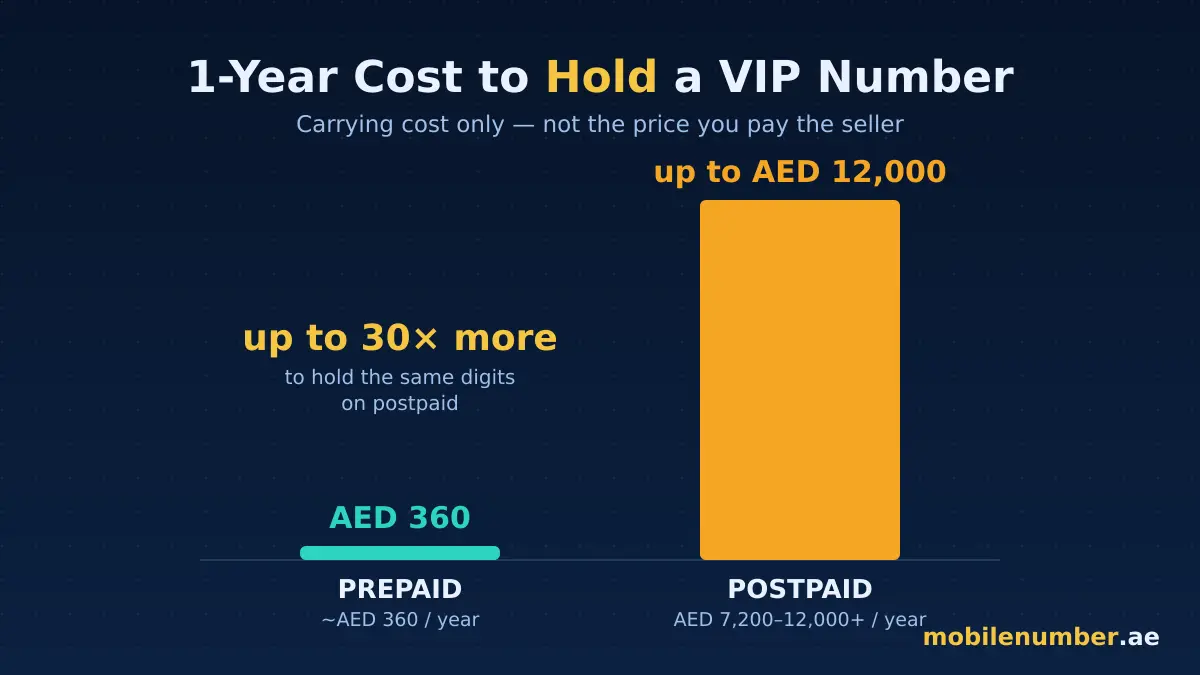
اگر آپ نمبر رکھنے یا فروخت کرنے کے لیے خرید رہے ہیں، تو پلان کی قسم دراصل لاگت کا فیصلہ ہے۔ پری پیڈ نمبر AED 360/سال سے کم پر آپ کا مارجن شاید ہی متاثر کرے؛ پوسٹ پیڈ نمبر AED 600+/ماہ پر خاموشی سے اسے ختم کر سکتا ہے۔ قدر کے تناظر کے لیے ہماری UAE نمبر ویلیویشن گائیڈ دیکھیں۔
کون سے کیریئرز VIP نمبرز کو پوسٹ پیڈ سے جوڑتے ہیں؟
کیریئر کی پالیسی ذاتی ترجیح سے زیادہ آپ کے اختیارات طے کرتی ہے۔ UAE کا ہر آپریٹر پریمیم نمبروں کے ساتھ مختلف سلوک کرتا ہے۔
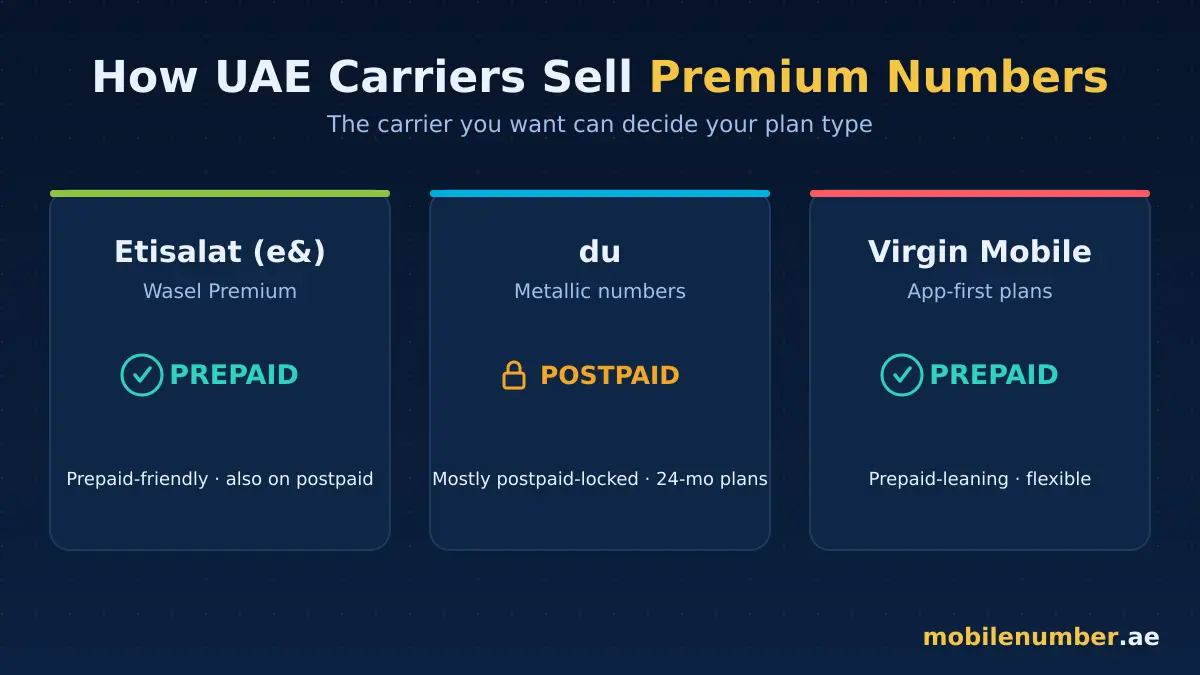
du اپنے زیادہ تر پریمیم "میٹالک" نمبرز صرف پوسٹ پیڈ پر فروخت کرتا ہے۔ سرکاری اسٹور سے اعلیٰ درجے کا du نمبر حاصل کرنے کا مطلب عموماً 24 ماہ کے لیے اعلیٰ قیمتی پوسٹ پیڈ پلان لینا ہوتا ہے۔ اگر آپ اس پابندی کے بغیر du نمبر چاہتے ہیں، تو ثانوی مارکیٹ اکثر واحد راستہ ہے — ہماری du VIP نمبرز گائیڈ دیکھیں۔
Etisalat (e&) اپنی Wasel Premium لائن کے ذریعے پریمیم نمبروں کے لیے سب سے زیادہ پری پیڈ دوست ہے، حالانکہ یہ پوسٹ پیڈ پلانز پر بھی پریمیم نمبرز پیش کرتا ہے۔ Virgin Mobile نے اپنا برانڈ لچکدار، ایپ پر مبنی پری پیڈ پلانز پر بنایا ہے اور نوجوان، پری پیڈ رجحان رکھنے والے صارفین کو پریمیم نمبرز پیش کرتا ہے۔
جو کیریئر آپ چاہتے ہیں وہ خاموشی سے آپ کا پلان طے کر سکتا ہے۔ du کا کلکٹر اکثر پوسٹ پیڈ قبول کرنے پر مجبور ہوتا ہے؛ Etisalat Wasel کے خریدار کو تقریباً کبھی ایسا نہیں کرنا پڑتا۔
دوبارہ فروخت اور لیکویڈیٹی: پلان کی قسم آپ کی فروخت کو کیسے متاثر کرتی ہے
دوبارہ فروخت کی لیکویڈیٹی یہ ہے کہ آپ کتنی جلدی اور صاف طریقے سے نمبر اس کی بازاری قیمت پر فروخت کر سکتے ہیں — اور پلان کی قسم سب سے بڑے پوشیدہ عوامل میں سے ایک ہے۔ پری پیڈ نمبر ایک صاف اثاثہ ہے: خریدار کیریئر اسٹور پر ایک سادہ ملکیتی تبدیلی سے اسے حاصل کر لیتا ہے، اور کوئی اکاؤنٹ بیلنس درست کرنے کی ضرورت نہیں۔
پوسٹ پیڈ نمبر اپنے ساتھ بلنگ اکاؤنٹ لاتا ہے۔ ملکیت منتقل ہونے سے پہلے، اکاؤنٹ عموماً بند یا نمٹایا جانا چاہیے، کنٹریکٹ کی مدت حل کی جانی چاہیے، اور لائن پلان سے منتقل کی جانی چاہیے۔ یہ اضافی پیچیدگی آپ کے خریداروں کی تعداد کم کرتی ہے اور فروخت سست کر سکتی ہے۔ رجسٹرڈ مالک بدلنے کی تفصیلات ہماری موبائل نمبر ملکیت منتقلی گائیڈ میں موجود ہیں۔
معاہدے کے درمیان پوسٹ پیڈ پریمیم نمبر فروخت کرنے پر قبل از وقت ختم کرنے کے اخراجات آ سکتے ہیں۔ فہرست بنانے سے پہلے معاہدے کی صورتحال تصدیق کریں، ورنہ خریدار کو ایسا نمبر مل سکتا ہے جسے رکھنا آپ کے لیے جتنا مہنگا تھا، اس سے کم میں انہیں منتقل ہو جائے۔
VIP نمبر کو فعال رکھنا
VIP نمبر تبھی قیمتی ہے جب وہ آپ کا ہو۔ اسے غیر فعال چھوڑ دیں اور کیریئر اسے واپس پول میں ڈال سکتا ہے — ایسے نمبر کے لیے ایک تباہ کن نتیجہ جس کے لیے آپ نے ہزاروں ادا کیے ہوں۔ پری پیڈ اور پوسٹ پیڈ اس سے مختلف طریقوں سے بچاتے ہیں۔
پری پیڈ نمبرز سرگرمی سے فعال رہتے ہیں: کیریئر کی مقررہ مدت میں ری چارج، ادا شدہ کال، یا ڈیٹا سیشن۔ سفر کے دوران، Homebound Pack پلان منسوخ کیے بغیر Etisalat پری پیڈ نمبر کو 30 یا 60 دن تک فعال رکھتا ہے۔ پوسٹ پیڈ نمبرز تب تک فعال رہتے ہیں جب تک ماہانہ بل ادا ہوتا رہے — خودکار، لیکن کبھی مفت نہیں۔
غیر فعالی کی مدت، مہلت، اور ری سائیکلنگ کے اصول بہت اہم ہیں اگر آپ ایسا نمبر رکھتے ہیں جو شاید ہی استعمال ہو۔ ہم نے انہیں اپنی UAE موبائل نمبر میعاد ختم ہونے کے اصولوں میں تفصیل سے بیان کیا ہے، اور طویل غیر حاضری کے اقدامات UAE چھوڑنا: اپنے نمبر کے ساتھ کیا کریں میں موجود ہیں۔
پری پیڈ بمقابلہ پوسٹ پیڈ نمبر کی منتقلی — مرحلہ بہ مرحلہ
چاہے آپ خریدار ہوں یا بیچنے والے، ملکیت کی منتقلی پلان کی قسم کے مطابق قدرے مختلف ہوتی ہے۔ یہ UAE کیریئر اسٹور پر معیاری طریقہ کار ہے۔
- پلان کی قسم اور صورتحال تصدیق کریں۔ پوسٹ پیڈ کے لیے، یہ یقینی بنائیں کہ اکاؤنٹ رجسٹرڈ اور بے باک ہے، کوئی بقایا بیلنس یا قبل از وقت ختم کرنے کا جرمانہ نہیں۔
- دونوں فریق Emirates ID لے کر آئیں۔ موجودہ اور نئے مالک درست سرکاری شناختی کارڈ پیش کریں؛ اکاؤنٹ بیچنے والے کے نام پر رجسٹرڈ ہونا چاہیے۔
- پوسٹ پیڈ اکاؤنٹ بند یا نمٹائیں۔ پوسٹ پیڈ لائنوں میں عموماً نام تبدیلی سے پہلے بل صاف اور پلان حل کرنا ہوتا ہے؛ پری پیڈ میں یہ مرحلہ نہیں ہوتا۔
- ملکیت کی تبدیلی مکمل کریں۔ کیریئر منتقلی پروسس کرتا ہے اور کوئی فیس لاگو کرتا ہے؛ نمبر خریدار کے نام ہو جاتا ہے۔
- خریدار کا پلان منتخب کریں۔ نیا مالک اسے پری پیڈ رکھتا ہے، یا معیاری رجسٹریشن کے ذریعے پوسٹ پیڈ پر منتقل کرتا ہے۔
اگر آپ نمبر کو کسی دوسرے نیٹ ورک پر بھی منتقل کر رہے ہیں، تو یہ ایک الگ عمل ہے — ہماری UAE MNP پورٹنگ گائیڈ دیکھیں۔
پری پیڈ کون خریدے؟ پوسٹ پیڈ کون خریدے؟
صحیح پلان کی قسم کا انحصار اس بات پر ہے کہ آپ نمبر کیوں خرید رہے ہیں اور کیسے استعمال کریں گے۔
پری پیڈ چنیں اگر آپ نمبر بنیادی طور پر ہندسوں کے لیے خرید رہے ہیں — رکھنے، تحفے میں دینے، سرمایہ کاری یا دوبارہ فروخت کے لیے — یا اگر آپ ہلکے سے درمیانے درجے کے صارف ہیں جو کنٹریکٹ کے بغیر کنٹرول چاہتے ہیں۔ پری پیڈ نئے آنے والوں کے لیے بھی عملی انتخاب ہے جو رہائشی کاغذات کا انتظار کر رہے ہیں، اور ان لوگوں کے لیے جو اکثر سفر کرتے ہیں اور کم لاگت میں نمبر فعال رکھنا چاہتے ہیں۔
پوسٹ پیڈ چنیں اگر آپ زیادہ ڈیٹا اور کالز کے صارف ہیں جو پلان کا مجموعی فائدہ اٹھائیں گے، کاروباری لائن چلاتے ہیں جسے قابل اعتماد اور رومنگ کی ضرورت ہو، یا ایسا مخصوص پریمیم نمبر چاہتے ہیں جسے کیریئر — زیادہ تر du — صرف پوسٹ پیڈ پلان پر فروخت کرتا ہو۔
پلان کو مقصد سے ملائیں۔ کلکٹر پری پیڈ خریدتا ہے اور لاگت صفر کے قریب رکھتا ہے۔ بھاری کاروباری صارف پوسٹ پیڈ خریدتا ہے کیونکہ پلان کی لاگت استعمال سے نکل آتی ہے۔
پری پیڈ اور پوسٹ پیڈ کے درمیان تبدیلی کا طریقہ
آپ ہمیشہ کے لیے پابند نہیں ہیں۔ UAE کیریئرز نمبر کو پری پیڈ اور پوسٹ پیڈ کے درمیان منتقل کرنے کی اجازت دیتے ہیں، لیکن اس تبدیلی کے اپنے نقصانات ہیں۔
پری پیڈ سے پوسٹ پیڈ میں جانے کا مطلب پوسٹ پیڈ اہلیت کی جانچ پوری کرنا ہے — Emirates ID اور اعلیٰ درجوں کے لیے آمدنی کا ثبوت۔ پوسٹ پیڈ سے پری پیڈ میں منتقلی ممکن ہے، لیکن آپ پلان کے مفت فوائد کھو دیتے ہیں اور بقیہ کنٹریکٹ مدت کا کوئی رقم واپس نہیں ملتا۔ وقت اس طرح منتخب کریں کہ آپ ایسے الاؤنس کی ادائیگی نہ کریں جو آپ استعمال نہیں کریں گے۔
پلان کی قسم چنتے وقت عام غلطیاں
چند قابل گریز غلطیاں UAE میں خریداروں کو ہر ماہ رقم ضائع کراتی ہیں۔
- صرف ہندسوں کے لیے پوسٹ پیڈ خریدنا۔ اگر آپ صرف نمبر چاہتے ہیں، تو AED 600+/ماہ کا پلان بیکار بوجھ ہے۔ اس کے بجائے پری پیڈ خریدیں۔
- قدر لگاتے وقت لاگت نظرانداز کرنا۔ "سستا" پوسٹ پیڈ نمبر ایک سال میں مہنگے پری پیڈ نمبر سے زیادہ خرچ کر سکتا ہے۔
- معاہدہ چیک کیے بغیر پوسٹ پیڈ نمبر فہرست میں ڈالنا۔ قبل از وقت ختم کرنے کا جرمانہ بیچنے والوں کو بدترین وقت پر چونکا دیتا ہے۔
- پری پیڈ نمبر ری چارج کیے بغیر چھوڑنا۔ ری چارج کی مدت گزر جائے تو کیریئر وہ نمبر ری سائیکل کر سکتا ہے جس کے لیے آپ نے ہزاروں ادا کیے تھے۔
- یہ سمجھنا کہ کوئی بھی نمبر پری پیڈ پر مل سکتا ہے۔ کچھ پریمیم درجے — خاص طور پر du میٹالک نمبرز — اصل ماخذ پر صرف پوسٹ پیڈ پر دستیاب ہیں۔
اکثر پوچھے جانے والے سوالات
UAE میں پری پیڈ یا پوسٹ پیڈ VIP نمبر بہتر کون سا ہے?
زیادہ تر خریداروں کے لیے پری پیڈ بہتر ہے۔ رکھنا سستا، کوئی معاہدہ نہیں، منتقلی صاف، اور دوبارہ فروخت آسان۔ پوسٹ پیڈ صرف زیادہ استعمال کرنے والوں کے لیے بہتر ہے یا جب کیریئر مخصوص پریمیم نمبر صرف پوسٹ پیڈ پلان پر فروخت کرے۔
کیا کوئی بھی VIP نمبر پری پیڈ پر لیا جا سکتا ہے?
ہمیشہ نہیں۔ Etisalat Wasel Premium اور Virgin کے نمبرز پری پیڈ دوست ہیں، لیکن du اپنے زیادہ تر اعلیٰ "میٹالک" پریمیم نمبرز صرف پوسٹ پیڈ پلانز پر فروخت کرتا ہے۔ ثانوی مارکیٹ پر آپ کو زیادہ آزادی ملتی ہے، کیونکہ ملکیت کی منتقلی کیریئر کے سیلز چینل سے آزادانہ ہوتی ہے۔
پری پیڈ VIP نمبر فعال رکھنے کی لاگت کتنی ہے?
بہت کم۔ کیریئر کی سرگرمی کی مدت میں کم از کم ری چارج — اکثر AED 30 سے بھی کم — نمبر کو زندہ رکھتی ہے۔ Etisalat Wasel کو تقریباً ہر 90 دن میں سرگرمی چاہیے، اس لیے سالانہ AED 360 سے کم لاگت ممکن ہے۔
پوسٹ پیڈ نمبر فروخت کرنے پر کیا ہوتا ہے?
ملکیت منتقل ہونے سے پہلے بلنگ اکاؤنٹ عموماً نمٹانا یا بند کرنا پڑتا ہے، اور کوئی فعال معاہدہ حل کرنا پڑتا ہے۔ دونوں فریق Emirates ID لے کر کیریئر اسٹور پر نام تبدیلی مکمل کرتے ہیں۔ یہ اضافی مرحلہ پوسٹ پیڈ نمبروں کو پری پیڈ کے مقابلے قدرے کم لیکویڈ بناتا ہے۔
کیا اپنا VIP نمبر پوسٹ پیڈ سے پری پیڈ میں منتقل کیا جا سکتا ہے?
ہاں، لیکن آپ پوسٹ پیڈ پلان کے مفت فوائد کھو دیتے ہیں اور بقیہ مدت کا کوئی رقم واپس نہیں ملتا۔ پری پیڈ سے پوسٹ پیڈ میں منتقلی بھی ممکن ہے اگر آپ اہلیت پوری کریں — درست Emirates ID اور اعلیٰ درجوں کے لیے آمدنی کا ثبوت۔
کیا پوسٹ پیڈ VIP نمبر خریدنے کے لیے تنخواہ سرٹیفکیٹ ضروری ہے?
بعض اوقات۔ بنیادی پوسٹ پیڈ پلانز عموماً صرف Emirates ID پر ملتے ہیں، لیکن اعلیٰ پریمیم درجوں کے لیے تنخواہ سرٹیفکیٹ یا UAE بینک اکاؤنٹ کی ضرورت پڑ سکتی ہے۔ نئے آنے والے جن کی رہائش ابھی زیر کارروائی ہے، وہ اکثر ابھی پوسٹ پیڈ نہیں کھول سکتے، اس لیے پری پیڈ عملی انتخاب ہے۔
کیا بیرون ملک جانے پر پری پیڈ VIP نمبر میعاد ختم ہو سکتا ہے?
ہاں، اگر آپ سرگرمی کی مدت چوک جائیں۔ Etisalat ایک Homebound Pack پیش کرتا ہے جو UAE سے باہر رہنے کے دوران پلان منسوخ کیے بغیر پری پیڈ نمبر کو 30 یا 60 دن تک فعال رکھتا ہے۔ میعاد ختم ہونے کے بعد بھی آپ معیاری عمل کے ذریعے نمبر کو پری پیڈ یا پوسٹ پیڈ پر دوبارہ رجسٹر کر سکتے ہیں۔
کیا پلان کی قسم VIP نمبر کی دوبارہ فروخت کی قیمت پر اثر ڈالتی ہے?
بالواسطہ طور پر، ہاں۔ پیٹرن اور پریفکس قیمت طے کرتے ہیں، لیکن پری پیڈ نمبر ایک صاف اور زیادہ لیکویڈ اثاثہ ہے کیونکہ کوئی اکاؤنٹ نمٹانا نہیں پڑتا۔ پوسٹ پیڈ نمبر جس کا معاہدہ حل نہ ہو، فروخت میں سست ہو سکتا ہے اور قبل از وقت ختم کرنے کے اخراجات ہو سکتے ہیں۔
ثانوی مارکیٹ میں زیادہ تر VIP نمبرز پری پیڈ ہوتے ہیں یا پوسٹ پیڈ?
زیادہ تر پری پیڈ ہوتے ہیں۔ پری پیڈ نمبرز فہرست بنانا، منتقل کرنا اور قدر لگانا آسان ہوتا ہے، اس لیے مارکیٹ پلیس کی فہرست میں یہی غالب ہیں۔ پوسٹ پیڈ پریمیم نمبرز بھی آتے ہیں، لیکن بیچنے والوں کو معاہدے کی صورتحال پہلے سے بتانی چاہیے۔
حتمی فیصلہ
UAE میں نمبر خریدنے والوں کی بھاری اکثریت کے لیے، پری پیڈ VIP نمبر رکھنے کا زیادہ سمجھدار طریقہ ہے: کم لاگت، کوئی معاہدہ نہیں، صاف منتقلی، اور بہتر دوبارہ فروخت کی لیکویڈیٹی۔ پوسٹ پیڈ صرف دو صورتوں کے لیے رکھیں — آپ واقعی زیادہ صارف ہیں جن کا پلان استعمال سے نکل آتا ہے، یا جو مخصوص پریمیم نمبر آپ چاہتے ہیں وہ صرف پوسٹ پیڈ پر دستیاب ہے، جیسا کہ بہت سے du میٹالک نمبروں کے ساتھ ہوتا ہے۔ ہندسوں کے دلدادہ ہونے سے پہلے پلان کی قسم طے کریں، لاگت کو ذہن میں رکھتے ہوئے فہرستیں دیکھیں، اور آپ کم قیمت میں بہتر اثاثہ رکھیں گے۔ پری پیڈ دوست اسٹاک سے شروع کریں ہماری Etisalat VIP نمبرز گائیڈ پر، پھر ہر پریفکس پر پیٹرنز اور قیمتوں کا موازنہ کریں۔